Table of Contents
- New York Home Selling
- Which Areas in New York Offer the Best Return on Investment and Are Easiest for Residential Property Development?
- What Home Styles, Sizes, and Features Tend to Sell Fastest in the New York Market?
- What Should Home Sellers Know About Zoning Laws, Permits, and Regulatory Requirements in New York?
- Which Towns or Cities in New York Are the Easiest â and Hardest â When It Comes to Navigating Real Estate Regulations?
- What Are the Most Effective Flipping and Resale Strategies for Maximizing Profit in New York's Housing Market?
- How Should Sellers Price Their Homes to Attract Buyers While Maximizing Value in New York?
- Which Key Economic, Social, and Regulatory Factors Are Driving Current Trends in New York's Local Property Markets?
New York Home Selling
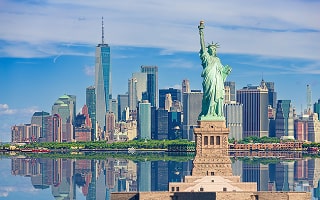
New York's housing market continues to attract attention and capital due to its combination of strong price growth, solid sales activity, and evolving supply dynamics. With a median sale price of $571,400 (a 4.2% year-over-year increase) in September 2025, New York property values are well above the national median of $414,000. On the demand side, the average number of homes sold in New York within the same period was 11,611, representing a 1% increase from the previous year.
Strong demand in the Empire State continues to drive sales, though the typical home spends 64 days on the market, slightly longer than the national median of 62. In certain upstate cities, including Albany, Rochester, Buffalo, Binghamton, and Syracuse, homes are selling considerably faster, where offers are often accepted within a few days of listing.
Though New York housing supply increased in September 2025 (+5.5% year over year), the state's 3-month supply of homes continues to tilt the power balance in favor of sellers. The data reveals that New York issued 2.02 new residential building permits for every 1,000 people annually, a rate that trailed the national average of 2.3 permits per 1,000 people. New York's building shortfall in previous years continues to keep housing stock tight and median prices higher than in many other regions.
On the fiscal side, the average effective property tax rate is around 1.4% of assessed value, placing New York around the top ten highest tax rates nationally, and above the U.S. median of 1.10%. This relative tax burden, combined with high home prices, may dampen affordability and influence buyer demand in certain segments and investor yield calculations.
Foreclosure activity in New York remains slightly below the national average. In September 2025, ATTOM reported one foreclosure in every 5,020 homes in New York, compared to the national average of one in every 3,997 units. This places New York in the middle of the pack, with some distressed-sale pressure in areas like Orange, Cayuga, and Nassau Counties.
Overall, these metrics show that the real estate market in New York still favors sellers and commands premium prices. However, slower supply growth, higher taxes, and some foreclosure risk remain challenges that sellers, buyers, and property investors face in the state.
Which Areas in New York Offer the Best Return on Investment and Are Easiest for Residential Property Development?
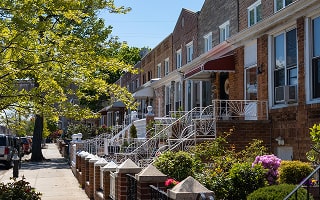
Across New York State, various cities and neighborhoods offer investors a mix of historic character, rising demand, and development-friendly regulations that help drive strong appreciation and rental returns. Here are ten areas in New York where property investors may yield strong returns on their investments.
- Long Island City, Queens: With its rezoning incentives and proximity to Manhattan, Long Island City continues to attract property investors. The median list price for a home in the city stands at $1.1 million, with forecasted price growth of 6.6%, making it Queens' fastest-appreciating market. When running numbers, investors should factor in affordable housing and inclusionary zoning requirements.
- Bushwick, Brooklyn: The median sale price in Bushwick is around $1.1 million, while the typical home spends about 63 days on the market. Bushwick is especially appealing to investors due to its flexible select R-districts with multifamily by-right approval on mapped lots. Investors should be sure to check for local inclusionary zoning rules before underwriting.
- Schenectady, Capital District: Schenectady is gaining attention as an affordable and promising real estate market, with a residential median sale price below $300,000 and average monthly rents around $1,500. Small apartments or multifamily homes are particularly attractive in this city.
- New Rochelle, Westchester County: The city has introduced a Transit-Oriented Development (TOD) zone near the transit center, encouraging the growth of mid-rise and multifamily buildings. The median sale price in New Rochelle was $875,000 in September 2025, representing an increase of 25% year over year. Investors benefit from added units under Downtown Overlay Zone rules.
- Astoria, Queens: The median list price for an Astoria property in September 2025 stood at around $787,000, a 10.2% increase from the prior year. Homes typically spend about 67 days on the market, indicating solid buyer interest. The city has a strong rental yield with a median rent of around $3,000, rising 5.5% year over year. Before investing, buyers and developers should review mandatory inclusionary zoning impacts.
- Elmwood Village, Buffalo: Investors benefit from relatively affordable pricing in Elmwood Village, with a median listing price around $416,000. Real estate developers and flippers in the Village have access to property tax abatements and incentive programs for eligible renovations. In Elmwood, investors should factor in Buffalo's Green Code, a form-based zoning system that sets rules for building density, design, and land use.
- Syracuse, Central New York: With median sales prices around $220,000, the cost of purchasing a property in Syracuse is low, creating room for strong cash flow and appreciation. Investors benefit from multiple redevelopment incentives, such as government-backed incentives for neighborhoods that fall within Opportunity Zones.
- Geneva, Finger Lakes: The median home price in the city is around $200,000, with values holding steady year over year. The Finger Lakes region attracts investors and tourists, offering growth opportunities and an accessible entry point. Short-term rental rules near the lakes can be restrictive, so investors should plan for long-term rentals to stabilize cash flow prior to exploring vacation rental opportunities.
- Albany, Capital District: One of New York's top-performing markets, Albany has a median home price of about $241,000, with gross rental yields approaching 8%. With a low rental vacancy rate of 4.8% and pro-development incentives — such as the Albany Historic Property tax abatement — Albany offers strong cash flow potential for rental investors.
- Rochester: With a population of over 204,000, Rochester is gaining recognition as a profitable real estate market, especially for long-term investors. Home prices are steadily climbing in the city, rising 9.2% to about $220,000 in recent years. Rochester has strong rent growth, with rent yields for entry-level and multifamily homes on the rise.
What Home Styles, Sizes, and Features Tend to Sell Fastest in the New York Market?
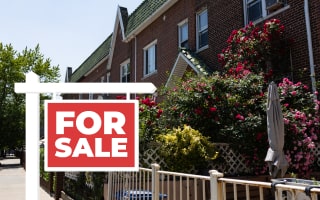
Across New York State, homes move at a pace that closely mirrors the nation as a whole. The median days on the market (DOM) stands at around 64, on par with the national average. In New York City, sales may be slightly faster, showing intense competition for limited inventory in core boroughs. Based on current New York real estate trends and buyer preferences, here are some home characteristics driving faster sales across the state.
-
![]() Bedrooms: 3-bedroom, 2-bathroom single-family homes represent the sweet spot for New York buyers, offering enough space for children and a home office without the maintenance burden of larger properties. In suburban counties like Westchester and Nassau, these homes regularly sell fast. In addition, 3-bed, 2-bath homes with a garage attract strong demand from first-time buyers, young buyers, and retirees downsizing in cities such as Albany, Rochester, Schenectady, and Buffalo.
Bedrooms: 3-bedroom, 2-bathroom single-family homes represent the sweet spot for New York buyers, offering enough space for children and a home office without the maintenance burden of larger properties. In suburban counties like Westchester and Nassau, these homes regularly sell fast. In addition, 3-bed, 2-bath homes with a garage attract strong demand from first-time buyers, young buyers, and retirees downsizing in cities such as Albany, Rochester, Schenectady, and Buffalo.
-
![]() Size and Lot: Homes between 1,500 square feet and 2,500 square feet that sit on half-acre lots are popular in Saratoga Springs, Hudson Valley, Kingston, Ithaca, Albany, and parts of Long Island, like Smithtown and Huntington. Buyers prefer this size because it balances indoor space with a yard that's suitable for outdoor living or an Accessory Dwelling Unit (ADU), but less costly to maintain. These homes often sell quickly, generating more interest and faster offers.
Size and Lot: Homes between 1,500 square feet and 2,500 square feet that sit on half-acre lots are popular in Saratoga Springs, Hudson Valley, Kingston, Ithaca, Albany, and parts of Long Island, like Smithtown and Huntington. Buyers prefer this size because it balances indoor space with a yard that's suitable for outdoor living or an Accessory Dwelling Unit (ADU), but less costly to maintain. These homes often sell quickly, generating more interest and faster offers.
-
![]() Style: Urban condos and townhouses in New York City and Buffalo's Elmwood Village move fast, typically selling within a month. Classic New England Colonials and Cape Cods in the Hamptons and Capital District sell at a premium and close within a few weeks. Farmhouse- and ranch-style homes in suburbs like Dutchess, Ulster, Putnam, and Rockland County, typically take longer to accept an offer, unless they've been outfitted with modern upgrades.
Style: Urban condos and townhouses in New York City and Buffalo's Elmwood Village move fast, typically selling within a month. Classic New England Colonials and Cape Cods in the Hamptons and Capital District sell at a premium and close within a few weeks. Farmhouse- and ranch-style homes in suburbs like Dutchess, Ulster, Putnam, and Rockland County, typically take longer to accept an offer, unless they've been outfitted with modern upgrades.
-
![]() Modern Upgrades: Properties featuring open-concept kitchens; stainless steel, energy-efficient appliances; and updated HVAC systems not only attract more showings but also tend to close faster than similar houses without these upgrades. This trend is observed in Buffalo and Rochester, as well as in Albany, Syracuse, Poughkeepsie, White Plains, and parts of Long Island, where updated interiors are key selling points for first-time buyers.
Modern Upgrades: Properties featuring open-concept kitchens; stainless steel, energy-efficient appliances; and updated HVAC systems not only attract more showings but also tend to close faster than similar houses without these upgrades. This trend is observed in Buffalo and Rochester, as well as in Albany, Syracuse, Poughkeepsie, White Plains, and parts of Long Island, where updated interiors are key selling points for first-time buyers.


What Should Home Sellers Know About Zoning Laws, Permits, and Regulatory Requirements in New York?
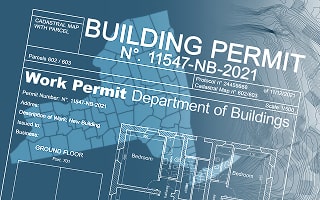
Home sellers and developers in New York should begin their due diligence by obtaining a zoning compliance letter from the local building or planning department. This document confirms the property's zoning district, permitted uses, and whether any violations or open enforcement actions exist. Documentation containing this information is also a common request from buyers before closing.
Generally, to maximize ROI and avoid costly delays, investors and sellers must navigate complex zoning laws, permit requirements, and historic preservation rules. Starting construction without a permit, breaking zoning rules, and other violations can lead to fines, delayed sales, or reduced property values. Here is a breakdown of how these rules vary by location across New York.
Strict Zoning Laws
- New York City: New York City's Zoning Resolution strictly controls what can be built and how it's used. Any changes, such as adding an ADU or converting a loft, often require special approval from the Board of Standards and Appeals.
- Westchester County: The Village of Scarsdale in Westchester County has strict zoning laws, especially for large lots. The city has frontage and setback minimums, in addition to imposing limits on the square footage of structures relative to the lot size. Any changes to a home's exterior must also be approved by the Village Board of Architectural Review.
- Long Island (Nassau and Suffolk County): Long Island presents a complex regulatory landscape for homebuilders and sellers due to its highly localized zoning framework. Each town and village has its own zoning ordinances, setback requirements, and land use rules.
Less Bureaucratic Zoning Laws
- Orange County: The county offers a streamlined permit and plan review system that simplifies the process for homeowners and builders. Projects that fully comply with existing codes and zoning regulations often receive permits in a few weeks.
- Erie County: The county makes it easy to get permits for common residential projects through its user-friendly online permit system. Homeowners and contractors can easily apply for permits for common projects, such as roofing, siding, HVAC installations, fences, and minor renovations.
- City of Rochester: The City of Rochester offers incentives to encourage the redevelopment of underutilized buildings. One key program is the Commercial Urban Exemption. This program supports the conversion of commercial or industrial structures into residential or mixed-use developments.
Special Permit and Public Hearing Required
- New York City: In New York City, any plan to change the use of a building to a hotel or expand an existing hotel requires a special permit from the City Planning Commission. The process includes a public hearing and a formal review, where developers must show how the project fits city planning goals.
- Nassau County: In Nassau County, any significant changes to how a property is used — such as building that exceeds zoning size limits, adding an extra unit, or using the property for a business — require a variance or special-use permit. These requests must be reviewed by the Zoning Board of Appeals.
- City of Rochester: In the City of Rochester (Monroe County), conditional-use permits for changes like accessory apartments or home-based businesses must be approved through a zoning special permit. It requires a public hearing overseen by the Planning Commission and Zoning Board of Appeals.
Certificate of Occupancy (CO)
- All Counties in New York State and New York City: Under the New York State Uniform Fire Prevention and Building Code, any new construction or change in occupancy requires a Certificate of Occupancy (CO). For example, converting a warehouse to an apartment must have a CO issued before anyone can legally reside there. In New York City, the Department of Buildings confirms that the structure, plumbing, electrical, elevators, and fire safety requirements have passed inspection before issuing a final CO. However, since many pre-1938 buildings in New York City lack a CO, sellers often obtain a Letter of No Objection (LNO) confirming lawful use.
Historic Commission Review
- New York City Landmarks Preservation Commission (LPC): In New York City, the LPC oversees any changes made to buildings that are official landmarks or those located in historic districts, such as Brooklyn Heights or SoHo. Any exterior changes, such as replacing windows, restoring a facade, or building an additional structure, require an LPC approval.
- Saratoga Springs: Buildings in historic areas, such as Broadway and Lake Avenue, are protected by special rules. Any changes to the exterior of these buildings, such as adding a sign, changing windows, or major repairs, require approval from the city's Design Review Commission.
Which Towns or Cities in New York Are the Easiest — and Hardest — When It Comes to Navigating Real Estate Regulations?

In New York, local real estate regulations vary significantly by municipality. Home sellers, developers, and investors must understand and comply with local zoning, permitting, environmental, and land-use rules to avoid delays, fines, stop-work orders, or even legal disputes.
Staying compliant not only prevents legal issues but also helps maximize resale value and ROI by ensuring smoother closings and fewer title concerns. Below is a breakdown of towns, cities, and counties based on how developer friendly or restrictive their real estate regulatory climate tends to be:
Development-Friendly Areas
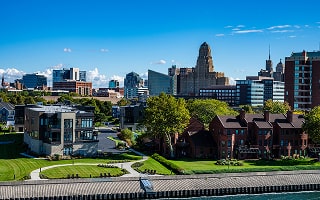
These markets actively encourage residential development, offering efficient permitting and more flexibility in zoning for infill or multifamily housing:
- Buffalo (Erie County): The city changed its zoning rules through the Unified Development Ordinance, making it easier to build on empty lots (urban infill), reuse old buildings (adaptive reuse), and create more affordable housing. The city also offers grants, tax incentives, and fast-track permits for projects that improve neighborhoods.
- Schenectady (Schenectady County): The city offers a historic rehab tax credit of up to 40% for qualified projects and a real property tax exemption on rehabilitation work for qualified historic properties. Schenectady's Mixed-Use Commercial and Downtown Mixed-Use zoning districts explicitly encourage buildings that combine residential and commercial uses within smaller-scale neighborhoods.
- Rensselaer (Rensselaer County): This county is known for its fast-track permitting. For planning-level approvals, the Planning and Zoning Board takes between 45 and 60 days for approvals before entering the permitting stage. The turnaround for a building permit for single- and multi-family housing is usually a few days.
- Binghamton: The Broome County Land Bank, serving Binghamton, launched a Vacant Rental Program. It's funded through New York State's program, which offers grants of $50,000-$75,000 per unit. The goal is to rehabilitate vacant rental units and restore them into habitable, affordable housing.
Moderately Regulated Areas
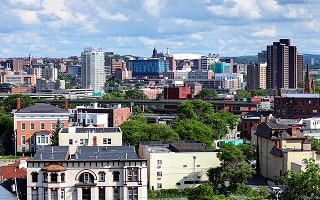
- Albany (Albany County): Albany uses a detailed land-use code to guide how property can be used or developed. The city supports higher-density projects, such as apartments, mixed use, and urban infill. However, before a project is approved, it must go through a plan review process.
- Ithaca (Tompkins County): Ithaca's Community Investment Incentive Tax Abatement Program — managed by the Tompkins County Industrial Development Agency — offers property tax abatements for real estate development. Projects inside the city's designated density district can qualify for graduated breaks, making it easy for investors and developers to move projects forward.
- Syracuse (Onondaga County): In Syracuse, the ReZone Syracuse initiative requires any new developments with 20 or more residential units to include affordable housing as part of the project. Any project requiring rezoning must be reviewed by the City Planning Commission.
- Long Island Suburbs (Nassau County): In Nassau County, homeowners may build ADUs, but they must follow strict compliance rules.
Highly Restrictive or Bureaucratic Areas
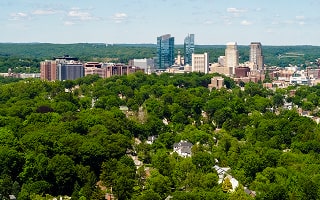
- New York City (All Boroughs): In New York City, zoning and development are highly regulated and complex. Large or high-density projects must go through the Uniform Land Use Review Procedure. The process requires public hearings with the Community Board, review at the Landmark Preservation Commission (if the property is in a historic district), and approval from the Department of Buildings.
- Scarsdale (Westchester County): Known for its strict zoning rules that limit what and where you can build. All changes, even small ones — like adding a porch or deck — must go through the Board of Architectural Review.
- East Hampton (Suffolk County): East Hampton enforces strict limits on new construction to protect its environment and small-town character. Development in this town faces strict Architectural Review Board oversight and tight environmental regulations. These rules limit building size, design, and site changes, making approvals slower and more complex.
- Southampton (Suffolk County): Southampton requires a Certificate of Appropriateness for alterations, new development projects, and demolitions affecting historic districts or landmarks.
Regulatory Climate Factors to Watch
The regulatory climate in New York State is highly localized, with the ease or difficulty of developing, renovating, or flipping residential properties varying significantly from one county or city to another. To minimize delays, reduce costs, and maximize ROI, it's crucial for investors and developers to understand local regulatory factors.
Below is a table outlining key regulatory factors, their impact on development, and where you might expect to encounter them:
| Factor | Impact on Development | Where It's Found |
|---|---|---|
| Zoning Flexibility | Determines ease of land use | Buffalo, Schenectady, Yonkers, Newburgh, Poughkeepsie, Troy, Middletown, Binghamton, New York City (opportunity zones), and Rochester |
| Historic Preservation Laws | Adds restrictions | New York City (Brooklyn Heights, SoHo, and Greenwich Village), Hudson Valley (Woodstock and Beacon), Albany, Kingston, Saratoga Springs, Southampton |
| Wetlands/Conservation | Limits buildable land | East Hampton, Southampton, Southold, Hudson Valley (Putnam and Dutchess County), Staten Island, and the Catskill region |
| Inclusionary Zoning | Requires affordable units | New York City, Ithaca, New Rochelle, White Plains, Albany, Syracuse, and Westchester County |
| Building Code Enforcement | Affects cost/speed | New York City, Long Island, Buffalo, Rochester, Mount Vernon, Greenburgh, and Syracuse |
| Local Politics/NIMBYism* | Blocks or delays projects | Scarsdale, East Hampton, Manhasset, Greenburgh, North Salem, Hudson Valley, Queens, and Brooklyn |
*NIMBYism - Not in My Backyard
What Are the Most Effective Flipping and Resale Strategies for Maximizing Profit in New York's Housing Market?
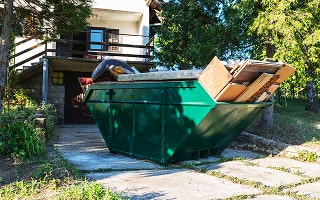
To maximize profit in New York's housing market, flippers and resale investors must navigate a highly localized and often tightly regulated landscape. The most effective strategies combine smart property buying, cost-effective renovations, and strong local market knowledge, especially since the state has both complex cities and opportunity-filled suburbs.
Based on an analysis of New York property market trends and investment strategies, here are some of the most effective flipping and resale strategies for maximizing profits.
-
![]() Targeting Distressed Properties: Targeting distressed properties — such as pre-foreclosures in New York City or bank-owned properties in Buffalo or Rochester — is a strategy that can create strong investment opportunities. Upstate cities like Schenectady and Binghamton, along with parts of Suffolk County on Long Island, also present high-potential markets for foreclosure deals and distressed properties. Partnering with local wholesalers can help uncover off-market deals that may be available below market value.
Targeting Distressed Properties: Targeting distressed properties — such as pre-foreclosures in New York City or bank-owned properties in Buffalo or Rochester — is a strategy that can create strong investment opportunities. Upstate cities like Schenectady and Binghamton, along with parts of Suffolk County on Long Island, also present high-potential markets for foreclosure deals and distressed properties. Partnering with local wholesalers can help uncover off-market deals that may be available below market value.
-
![]() Using the 70% Rule: The 70% rule helps investors avoid overpaying by ensuring there's enough profit margin after repairs. To calculate an offer using the 70% rule, simply take 70% of the property's after-repair value (ARV) and subtract the estimated repair costs. This method is beneficial in expensive areas like Brooklyn, Manhattan, or Nassau County, where renovation costs can add up quickly.
Using the 70% Rule: The 70% rule helps investors avoid overpaying by ensuring there's enough profit margin after repairs. To calculate an offer using the 70% rule, simply take 70% of the property's after-repair value (ARV) and subtract the estimated repair costs. This method is beneficial in expensive areas like Brooklyn, Manhattan, or Nassau County, where renovation costs can add up quickly.
-
![]() Wholetailing for Speed: With wholesaling, investors make quick profits by doing minimal upgrades, such as painting, landscaping, or updating fixtures, then reselling. Wholesaling for speed works best in fast-moving suburban markets, including Westchester, Orange, and Nassaucounties, where homes sell quickly.
Wholetailing for Speed: With wholesaling, investors make quick profits by doing minimal upgrades, such as painting, landscaping, or updating fixtures, then reselling. Wholesaling for speed works best in fast-moving suburban markets, including Westchester, Orange, and Nassaucounties, where homes sell quickly.
-
![]() Using the Buy, Rehab, Rent, Refinance, Repeat Method (BRRRR): The BRRRR method works best in affordable, high-rental-demand cities like Buffalo, Rochester, Syracuse, and parts of New York City. The BRRRR method works by buying undervalued properties, then adding value through renovations before renting them out. After 6 to 12 months, investors can refinance to recover their investment and repeat the process.
Using the Buy, Rehab, Rent, Refinance, Repeat Method (BRRRR): The BRRRR method works best in affordable, high-rental-demand cities like Buffalo, Rochester, Syracuse, and parts of New York City. The BRRRR method works by buying undervalued properties, then adding value through renovations before renting them out. After 6 to 12 months, investors can refinance to recover their investment and repeat the process.
-
![]() Value-Add Flipping (Beyond Cosmetic Work): Value-add flipping focuses on major improvements that boost a property's long-term value and potential income. These improvements may include converting a single-family home into a duplex, finishing a basement to create livable space, or adding legal ADUs. Value-add flipping is ideal in dense urban markets, such as Queens, Brooklyn, and parts of Yonkers, where housing demand is strong and space is limited.
Value-Add Flipping (Beyond Cosmetic Work): Value-add flipping focuses on major improvements that boost a property's long-term value and potential income. These improvements may include converting a single-family home into a duplex, finishing a basement to create livable space, or adding legal ADUs. Value-add flipping is ideal in dense urban markets, such as Queens, Brooklyn, and parts of Yonkers, where housing demand is strong and space is limited.
-
![]() Auction and Off-Market Buying Strategies: Auction and off-market buying strategies are great ways to find real estate deals below market value.This strategy thrives in cities, such as Albany, Rochester, and Utica, where investor activity is high.
Auction and Off-Market Buying Strategies: Auction and off-market buying strategies are great ways to find real estate deals below market value.This strategy thrives in cities, such as Albany, Rochester, and Utica, where investor activity is high.


How Should Sellers Price Their Homes to Attract Buyers While Maximizing Value in New York?

When it comes to New York home valuation, pricing your property correctly is key to maximum market impact and ROI. A great first step is to work with a local real estate agent or licensed appraiser, who can perform a detailed 90-day comparative market analysis (CMA). A CMA works by comparing your home to similar properties that are active, pending, or recently sold in your area. It helps you set a fair price — one that's high enough to maximize profit but not so high that it scares off buyers. When pricing your New York home for maximum value, consider using one of the following strategies:
-
![]() Pricing Just Below Market Thresholds: Threshold pricing is listing your property just below round numbers — like $499,999 instead of $500,000 — to attract more buyer attention. This strategy works especially well in areas like New York City, Nassau, and Westchester, where homes under certain price points are likely to show up in more online searches.
Pricing Just Below Market Thresholds: Threshold pricing is listing your property just below round numbers — like $499,999 instead of $500,000 — to attract more buyer attention. This strategy works especially well in areas like New York City, Nassau, and Westchester, where homes under certain price points are likely to show up in more online searches.
-
![]() Charm Pricing: For charm pricing, you'll end your home's listing price with an odd number, like "9" — such as $749,900 instead of $750,000 — to create a sense of value and urgency. This tactic works well in New York's mid-tier suburban markets, including Nassau, Rockland, Orange County, and Albany's suburbs.
Charm Pricing: For charm pricing, you'll end your home's listing price with an odd number, like "9" — such as $749,900 instead of $750,000 — to create a sense of value and urgency. This tactic works well in New York's mid-tier suburban markets, including Nassau, Rockland, Orange County, and Albany's suburbs.
-
![]() Pricing to Create a Bidding War: This strategy prices your home slightly below market value — about 5-10% lower than recent comparable sales. The bidding-war strategy shines in areas with top-ranked school districts (Scarsdale, Great Neck, Jericho, Syosset, Chappaqua) and in brownstone Brooklyn, where demand exceeds supply.
Pricing to Create a Bidding War: This strategy prices your home slightly below market value — about 5-10% lower than recent comparable sales. The bidding-war strategy shines in areas with top-ranked school districts (Scarsdale, Great Neck, Jericho, Syosset, Chappaqua) and in brownstone Brooklyn, where demand exceeds supply.
-
![]() High-Anchor Pricing (Test the Waters): High-anchor pricing means listing your home at the high end of its market value to test buyer interest and leave room for negotiation. It works best for high-end or unique properties, like luxury homes in Manhattan, Gold Coast estates, or one-of-a-kind Hudson Valley retreats, where direct competition is limited.
High-Anchor Pricing (Test the Waters): High-anchor pricing means listing your home at the high end of its market value to test buyer interest and leave room for negotiation. It works best for high-end or unique properties, like luxury homes in Manhattan, Gold Coast estates, or one-of-a-kind Hudson Valley retreats, where direct competition is limited.
-
![]() Price-Per-Square-Foot Benchmarking: This means pricing your home based on the average cost per square foot of similar properties in your immediate area. This method works well in areas with uniform housing, including subdivisions in Suffolk County or condos in Buffalo and Rochester, where buyers and sellers compare listings using this metric.
Price-Per-Square-Foot Benchmarking: This means pricing your home based on the average cost per square foot of similar properties in your immediate area. This method works well in areas with uniform housing, including subdivisions in Suffolk County or condos in Buffalo and Rochester, where buyers and sellers compare listings using this metric.
-
![]() Appraisal-Backed Pricing: Appraisal-backed pricing means listing the property close to its expected appraised value (typically within 95%-100%) to avoid financing issues. Appraisal-backed pricing is especially useful in areas where FHA and VA loans are common — like Staten Island, outer Queens, parts of Westchester, and Long Island condos — where buyers rely on loans with strict appraisal limits.
Appraisal-Backed Pricing: Appraisal-backed pricing means listing the property close to its expected appraised value (typically within 95%-100%) to avoid financing issues. Appraisal-backed pricing is especially useful in areas where FHA and VA loans are common — like Staten Island, outer Queens, parts of Westchester, and Long Island condos — where buyers rely on loans with strict appraisal limits.
-
![]() Net-to-Seller Pricing: Net-to-seller pricing starts with the amount you want to walk away with — your net proceeds — and adds estimated selling costs, like agent commissions, attorney fees, and transfer taxes (typically 8%-10% in New York). It's ideal in high-cost areas such as Yonkers and Albany. In addition, sellers in White Plains, New Rochelle, and Brooklyn use the approach to protect their bottom line.
Net-to-Seller Pricing: Net-to-seller pricing starts with the amount you want to walk away with — your net proceeds — and adds estimated selling costs, like agent commissions, attorney fees, and transfer taxes (typically 8%-10% in New York). It's ideal in high-cost areas such as Yonkers and Albany. In addition, sellers in White Plains, New Rochelle, and Brooklyn use the approach to protect their bottom line.
-
![]() Urgency Pricing (Motivated Seller Strategy): Urgency pricing is used when sellers need to move fast due to less-than-ideal situations, such as divorce, job relocation, or pre-foreclosure. The home is typically listed below market value and is ideal when speed matters more than top dollar. Urgent pricing is effective in commuter towns, such as Beacon and Peekskill, where it can reduce time on the market, and in Middletown and Schenectady, where aggressive pricing helps sellers avoid prolonged listings.
Urgency Pricing (Motivated Seller Strategy): Urgency pricing is used when sellers need to move fast due to less-than-ideal situations, such as divorce, job relocation, or pre-foreclosure. The home is typically listed below market value and is ideal when speed matters more than top dollar. Urgent pricing is effective in commuter towns, such as Beacon and Peekskill, where it can reduce time on the market, and in Middletown and Schenectady, where aggressive pricing helps sellers avoid prolonged listings.


To ensure your New York home sells quickly and at the best price, choose a pricing strategy that fits both your local market and your property type. Below is a quick guide to market conditions and the optimal strategy for each scenario:
| Market Condition | Best Strategy |
|---|---|
| Seller's market | Underpricing for a bidding war |
| Buyer's market | Charm pricing or net-to-seller |
| Unique, luxury home | High-anchor + value justification |
| Entry-level home | Just-below threshold |
| Urgent sale needed | Aggressive urgency pricing |
| Flipper or investor listing | Appraisal-backed or price-per-square-foot |
Which Key Economic, Social, and Regulatory Factors Are Driving Current Trends in New York's Local Property Markets?

New York's property markets are shaped by an interplay of economic trends, demographic shifts, regulatory frameworks, and investor sentiment. Here's an overview of the key factors driving demand and supply across the property market in New York State:
![]() Economic Factors
Economic Factors
 Economic Factors
New York's job market remains one of the strongest in the country, especially in tech, finance, education, and healthcare. New York City and Albany continue to attract professionals, boosting real estate demand. In 2024, the state's real GDP increased by 1.8%, and wages grew by 21.3% between 2019 and 2023. This helps buyers offset the impact of above-average prices and higher mortgage rates.
The Consumer Price Index (CPI) for the New York-Newark-Jersey City area rose by 0.4% in April 2025 and 3.9% over the year, mainly due to housing and energy costs. Despite wage growth, housing affordability in New York remains strained.
![]() Demographic and Social Factors
Demographic and Social Factors
 Demographic and Social Factors
New York City is projected to see modest population growth in outer-borough submarkets through 2030, driven by the working population and international migrants. These trends are common in parts of Brooklyn and Queens, where housing costs are relatively lower. In contrast, many upstate areas are losing residents, with people relocating to nearby rural areas offering job opportunities, urban-style amenities, and more affordable living costs.
With a median age of around 38, housing demand is split between young families favoring suburbs like Westchester and Long Island, and older adults downsizing to city condos. However, there's still a shortage of "missing middle" housing — such as duplexes and low-rise condos — in places like Ithaca and Kingston, limiting affordable living options.
Lifestyle preferences also shape the property market. Young professionals generally seek wellness-oriented, walkable "live-work-play" communities with shops, parks, restaurants, and coworking spaces, fueling demand for a social urban living experience.
![]() Regulatory and Legal Framework
Regulatory and Legal Framework
 Regulatory and Legal Framework
New York's property market is shaped by varied zoning rules. New York City's Zoning Resolution and rezonings, especially in parts of Queens, allowed taller buildings and more housing units. In contrast, areas like Scarsdale enforce strict large-lot zoning, limiting new construction. Historic areas like SoHo and downtown Hudson require preservation commission approvals, adding delays to construction.
Rent stabilization and rent control laws, mainly in New York City and parts of Westchester, protect current tenants by limiting rent increases. For 2024-2026, rent-stabilized lease renewals are capped at 2.75-3%, helping affordability but also discouraging upgrades and new rental development.
![]() Taxation and Fiscal Policy
Taxation and Fiscal Policy
 Taxation and Fiscal Policy
Taxes significantly impact New York real estate investment. The state's top income tax rate of 10.9%, reduces seller profit, making states with no income tax — like Florida and Texas — more appealing. Some wealthy buyers instead invest in second homes in areas like the Hamptons, where long-term value outweighs tax costs.
New York City's expired 421-a remains available only to grandfathered projects. Projects that vested before the deadline can still qualify under a limited timeline; officials are considering replacements. Transfer taxes also raise closing costs in the state, pushing average total transaction costs to more than 1.8% of the sale price. In New York City, those costs are even higher, with an additional 1.425% tax on top of the 0.4% real estate transfer tax that's imposed statewide. These taxes reduce margins, especially for high-volume or short-term investors, making strategic planning a critical part of each investment decision.
![]() Housing Policy and Government Programs
Housing Policy and Government Programs
 Housing Policy and Government Programs
New York promotes affordability through several programs. The Affordability Housing Opportunities Program funds "missing middle" condo projects in cities like Ithaca and Kingston. The proposed Housing Access Voucher Program would provide $50 million in state-funded rental aid in its first year, supporting thousands of low-income households.
Additionally, the state uses federal Community Development Block Grant funds to assist residents in buying or repairing homes. The program, which is designed to boost affordability, typically includes down payment assistance for first-time buyers and financial support for home repairs and safety upgrades.
![]() Infrastructure and Development Trends
Infrastructure and Development Trends
 Infrastructure and Development Trends
Major transit projects are driving development in New York. The Second Avenue Subway extension has boosted condo construction on Manhattan's Upper East Side, while the Long Island Rail Road East Side Access Project has opened up construction in Long Island City, raising property prices above preconstruction levels. The proposed high-speed rail upgrades are attracting mixed-use developers by improving intercity travel and increasing property values.
![]() Market Sentiment and Investor Behavior
Market Sentiment and Investor Behavior
 Market Sentiment and Investor Behavior
In upstate cities, such as Buffalo and Albany, local real estate investors remain active. Many property developers flip older or distressed homes, renovating them and selling them at a higher price to make a profit. Speculative buying is also rising in areas with expected rezoning, as investors anticipate future value increases.
Similarly, investors are purchasing homes early, with the aim of benefiting from future development and rising property values. These buyers are betting that property values will increase when zoning changes allow for taller buildings in those areas.
New York's housing market remains robust, commanding premium prices, especially in New York City and Westchester and Nassau counties. Homes are selling faster than in previous years but slower than the national average. Challenges include tight supply growth, high property taxes, and elevated foreclosure rates.
Navigating New York's property market requires understanding local restrictions, which vary significantly in complexity from development-friendly areas to strictly regulated locales. Effective strategies include purchasing distressed properties, making critical upgrades, and using tailored pricing techniques. Key drivers of New York's property market include the state's strong economy, population trends, zoning laws, and large infrastructure projects, all of which influence where and how housing is built and sold across New York.
Table of Contents
- New York Home Selling
- Which Areas in New York Offer the Best Return on Investment and Are Easiest for Residential Property Development?
- What Home Styles, Sizes, and Features Tend to Sell Fastest in the New York Market?
- What Should Home Sellers Know About Zoning Laws, Permits, and Regulatory Requirements in New York?
- Which Towns or Cities in New York Are the Easiest â and Hardest â When It Comes to Navigating Real Estate Regulations?
- What Are the Most Effective Flipping and Resale Strategies for Maximizing Profit in New York's Housing Market?
- How Should Sellers Price Their Homes to Attract Buyers While Maximizing Value in New York?
- Which Key Economic, Social, and Regulatory Factors Are Driving Current Trends in New York's Local Property Markets?